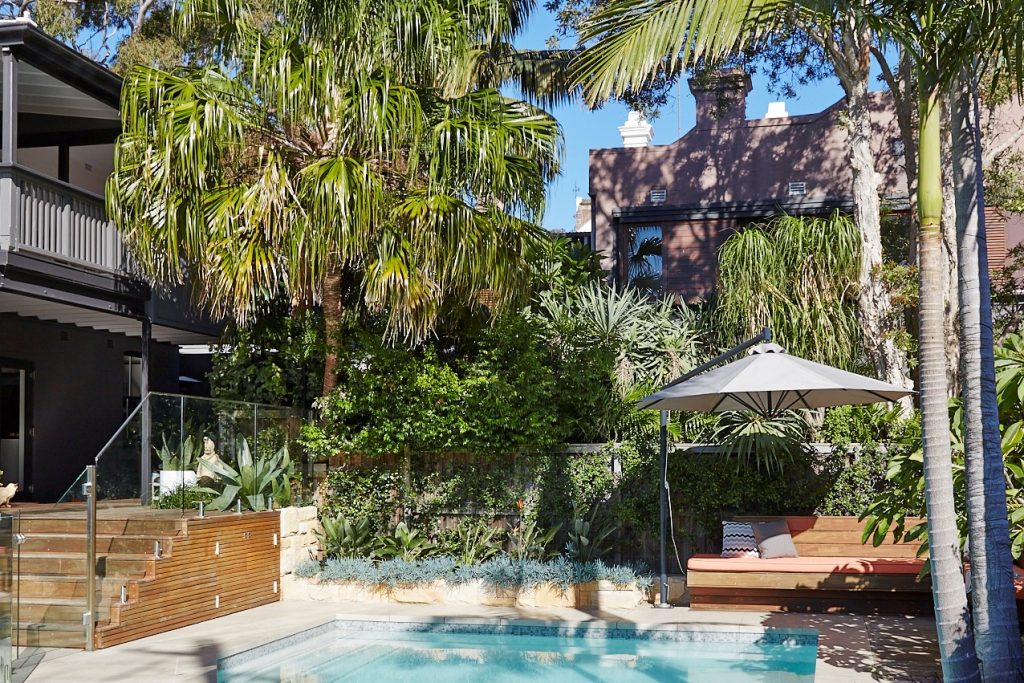
When designing a family pool, there are a number of elements which should be considered to ensure the pool sits within the landscape and becomes a functional, safe and enjoyable asset to your home.
1. Maximise Space
With the increase of large homes being built on smaller blocks of land, there is a demand for swimming pools to be designed into compressed and unconventional spaces. The positioning of your pool and pool fence is becoming more important than ever to ensure you make the most of your available space.
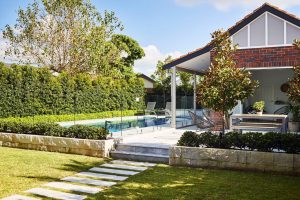
To maximise your pool and entertaining garden space ensure you:
- Choose your pool location wisely so it won’t section off a random, dysfunctional area of your backyard.
- Ensure there is easy access from your house to your pool. Avoid having multiple entries and exits. There should be one exit point from the house, to the pool fence, to the pool steps for seamless use.
- Look at building against your property boundary so you can use the existing boundary fence as part of your pool fence.
- Placing your fence closer to your pool can increase the surrounding garden and entertaining areas. This also minimises unnecessary pathway space used around the whole circumference of your pool.
TOP TIP: don’t just design your swimming pool and fence in isolation. They both need to be part of the whole picture and work harmoniously and complement your home design style.
2. Underwater bench seating
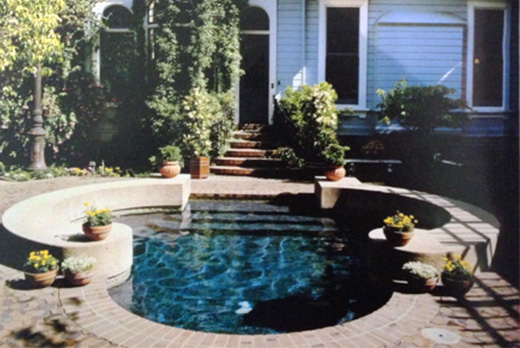
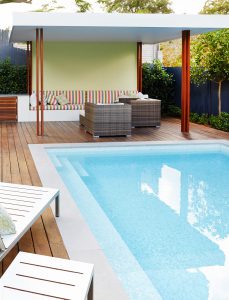
Underwater bench seating can provide a safe retreat for children to play or those learning to swim. With the water level finishing around chest height on adults when seated, it also provides assistance for children to relax and safely stay above water. When bench seating is located on the side of a pool, swimmers can still stretch out to swim laps.
 |
 |
|---|
Generous entry steps are also important to consider. Not everyone likes to enter with a splash and children often like to gradually work their way in. Generous steps can also be integrated into bench seating.
TOP TIP: Even with enough seating, the biggest deterrent on how often families use their pool is the water temperature. Consider the placement of your pool in your yard (sun or shade) and the size of your pool (how long will it take to heat- irrespective of the heating method).
3. Safety
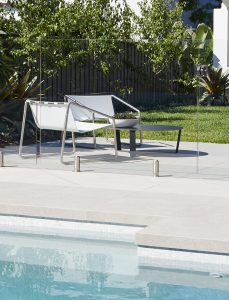
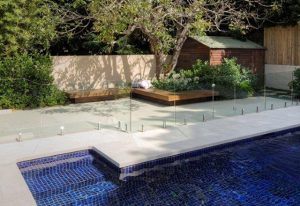
Pool compliance is the most critical part of any pool project. It is vital that all Australian pools comply with the Australian standards. With clever design, pool fences can become a striking design feature that compliments your house aesthetic.
 |
 |
|---|
TOP TIP: Ensure you have checked your states specific compliance rules before diving in and signing off on your pool design dreams.
4. Bonus: Style
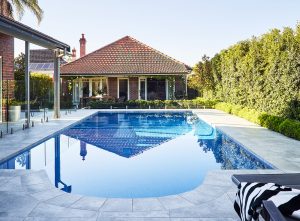
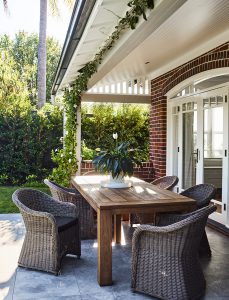
It is important to have complete creative transparency and agree on your swimming pool aesthetic with your landscape designer prior to starting your project. Expressing the main purpose of your entertaining area and pool plays a vital part in its design. Are you looking primarily for family recreation? Exercise? Relaxation? Or purely a design feature?
If you’re overwhelmed, a good place to start is to know who will predominantly be using the pool and what is your design direction (eg. retro, contemporary, traditional etc.)
 |
 |
|---|
TOP TIP: Swimming pools don’t always have to be blue. Blacks, greens and whites can help compliment and blend elements of surrounding architecture and landscapes. Try using complementary colours with a subtle contrast in your design.
Check out our inspirational portfolio of swimming pools that Think Outside Gardens have done in Sydney.
FAQs
Choose the location so the pool doesn’t section off a random, unusable corner of the yard. Building against the property boundary lets you use the existing boundary fence as part of the pool fence, and placing the fence closer to the pool frees up more surrounding garden and entertaining space rather than losing it to pathway around the full circumference.
One. Avoid multiple entries and exits a single path from the house, through the pool gate, to the pool steps keeps the space functional and easy to use.
A submerged ledge that gives children and learners a safe retreat, with the water sitting around chest height on a seated adult. Positioned along the side of the pool, it doesn’t interrupt lap swimming, and it can be integrated with generous entry steps for people who prefer to ease in rather than jump.
Water temperature. Both the pool’s position in the yard sun versus shade — and its size determine how long it takes to heat, whatever heating method you choose.
No. Black, green and white interiors can complement surrounding architecture and landscape, and often blend better than a standard blue. Using complementary colours with a subtle contrast is a good starting point.